

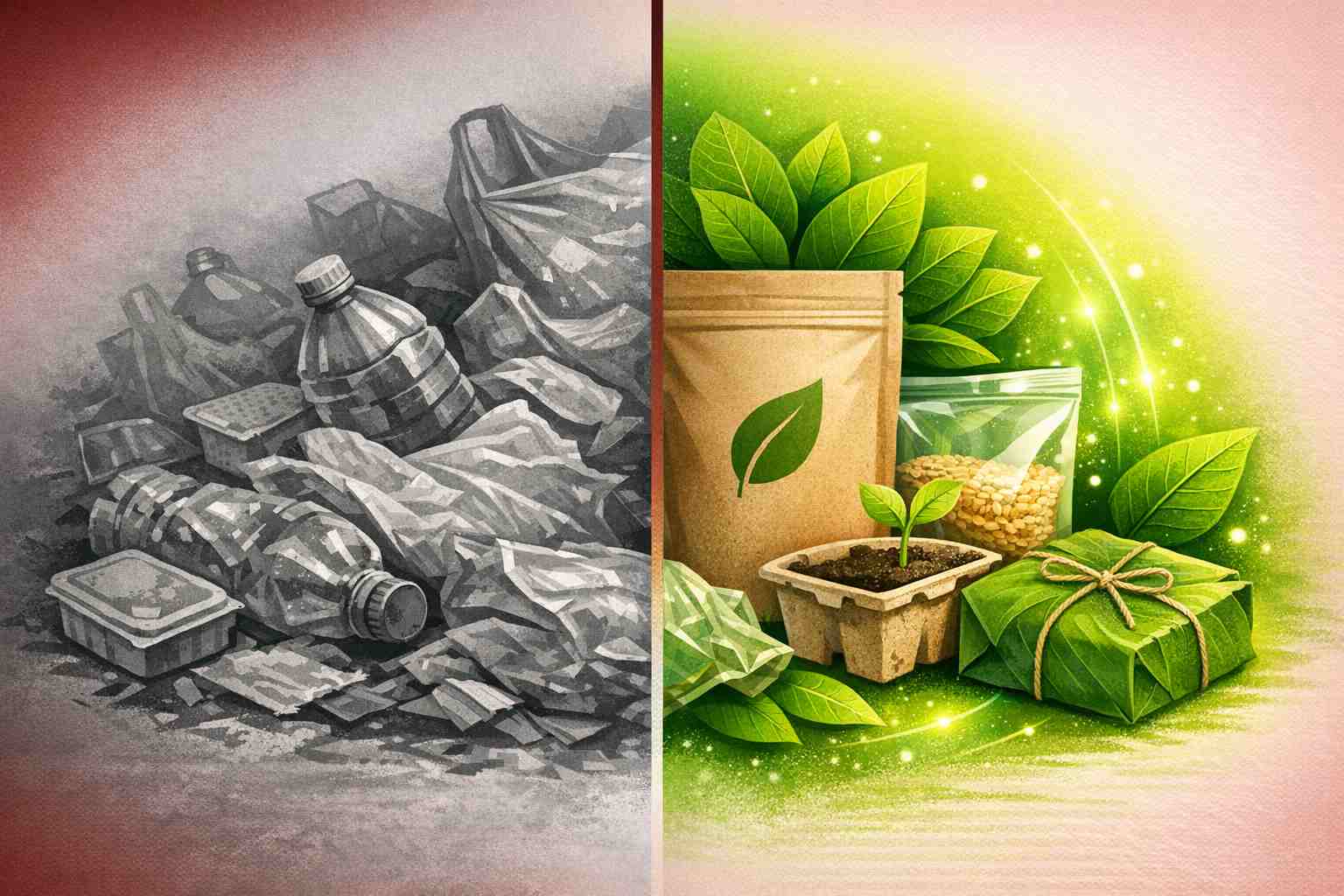
In a bustling market like India, from the local kirana store shelf to the aisles of a modern supermarket, packaging is the first handshake with the customer. For industries like FMCG, food production, agriculture, and pharma, plastic packaging is a silent workhorse. It keeps our food fresh, our medicines safe, and our products secure during their long journey across the country. But let’s be honest, we’ve all seen the other side of the story—the environmental concerns that come with it. This article dives deep into the truth about flexible packaging, busting myths and exploring innovative solutions that are shaping a more sustainable future.
Understanding the Two Sides of the Coin: The Impact of Plastic Packaging
To truly understand the environmental footprint of polymer-based packaging, we need to look at its entire journey, or what experts call its lifecycle. This starts from when it’s made, often from petroleum-based raw materials, to its transportation, use, and finally, its disposal. Each step has its own environmental cost.
However, it’s not all bad news. Because plastic is so lightweight, it actually requires less energy to transport than heavier materials like glass or metal. This means fewer carbon emissions from trucks crisscrossing our highways. The real challenge, as we all know, is what happens after we’re done with it. When not disposed of correctly, plastic pouches and wrappers can end up in our landfills and oceans, causing pollution. The breakdown into microplastics is a serious concern for marine life and potentially our health.
Many people ask why recycling rates for plastics are low. It’s often because of challenges in sorting different types of plastics, especially when they are part of multi-layered packaging. This is why a significant portion of environmental policies today focuses on single-use items.
Busting Common Myths: Getting the Facts Straight
There’s a lot of misinformation out there about plastic packaging. Let’s clear the air on a few common myths.
“Glass and paper are always better for the environment.”
This is a common belief, but not always the full picture. Manufacturing glass and paper can consume a lot more energy and water. Plus, their heavier weight means more fuel is needed for transportation, leading to a higher carbon footprint. The best choice really depends on the product and the entire lifecycle of the packaging.
“All plastics are harmful and non-recyclable.”
This simply isn’t true. Many types of plastic are designed to be recycled. The success of recycling depends heavily on our local infrastructure—the collection and sorting facilities available in our cities. Not all plastics are created equal; some are more environmentally impactful than others, but lumping them all together is a mistake. The key is choosing the right type of plastic and ensuring it gets into the proper recycling stream.
“Bioplastics are the perfect, automatic solution.”
Bioplastics are a promising innovation, but they are not a magic wand. Some types require specific industrial composting conditions to break down and won’t biodegrade in a regular landfill. It’s an evolving technology that holds great promise for the future.
The Future is Now: Innovations Driving Sustainable Packaging
The good news is that the packaging industry is buzzing with innovation to tackle these environmental challenges head-on. Here are some of the exciting developments:
- Biodegradable & Compostable Materials: New materials are being developed that break down under specific conditions, reducing long-term pollution.
- Lightweighting: Engineers are designing pouches and films that use less material without sacrificing strength. This cuts down on manufacturing energy and transport emissions.
- Recycled Content (PCR): More companies are using post-consumer recycled (PCR) materials, creating a circular economy where old packaging becomes new again.
- Design for Recycling: A major shift is happening towards using mono-materials (a single type of plastic) which makes the recycling process much simpler and more efficient.
- Smart Packaging: Technologies that extend the shelf life of food products are crucial in a country like ours, as they help combat the massive problem of food waste.
Collaboration is the key. When manufacturers, policymakers, and recyclers work together, these solutions can be scaled up to make a real difference.
Tirupati Traders: Your Partner in Responsible & High-Quality Packaging
Navigating the world of packaging can be complex for any business. You need a solution that protects your product, showcases your brand, and aligns with your sustainability goals. This is where we, at Tirupati Traders, a leading manufacturer from Kolkata, come in.

We understand the unique needs of Indian FMCG brands, food manufacturers, and agro and pharma companies. For years, we’ve helped brands like Zaha Atta, Puja Paneer, and Hamza Spices get their products to market safely and stylishly. We believe in balancing functionality with environmental responsibility.
How We Can Help Your Business Grow:
- Customized Packaging Solutions: One size never fits all. We create tailor-made pouches that meet your specific business needs, whether it’s for food products, seeds, or pharmaceuticals. Our solutions are designed to be durable and hygienic.
- Focus on Food Safety and Hygiene: The freshness and safety of your food products are non-negotiable. Our specialized pouches, like the printed paneer packaging plastic pouch, are designed to lock in freshness and guarantee hygiene.
- Eco-Conscious Materials: We are committed to sustainability and use innovative, lightweight materials that help reduce transportation emissions and overall waste, without compromising on quality.
- Powerful Branding with Printed Pouches: Your packaging is your best salesperson on the shelf. We offer high-quality printing services to make your brand stand out and connect with customers.
For high-quality, customizable, and forward-thinking packaging pouch solutions, let’s talk. Contact our expert team at +91 7003213441 to find the perfect packaging for your brand.
The Path Forward: Driving Change Together
Creating a truly sustainable packaging ecosystem isn’t just up to manufacturers. It requires a collective effort. Government policies like Extended Producer Responsibility (EPR), which holds producers accountable for their packaging waste, are crucial. Public awareness campaigns that educate people on how to segregate and recycle waste properly also play a massive role.
As a business, the choices you make have a ripple effect. By opting for smartly designed packaging, reducing over-packaging, and educating your customers, you not only reduce your environmental impact but also build a stronger, more trusted brand in the eyes of today’s conscious consumers.
The conversation around plastic packaging is shifting from “problem” to “potential.” With the right strategies, materials, and partners, it can continue to be an essential tool for businesses while being part of a sustainable, circular economy.