

In India, chai isn’t just a beverage; it is an emotion, a daily ritual, and a massive industry. For FMCG brands, food manufacturers, and agro-businesses, delivering this beloved commodity in pristine condition is a top priority. Over the centuries, the way we store and transport tea has transformed dramatically. From the heavy wooden chests of the colonial era to today’s sleek, modern resealable pouches, the journey of tea packaging is a brilliant showcase of how functionality meets design and sustainability.
At Tirupati Traders, a trusted packaging manufacturer based in the vibrant manufacturing hub of Kolkata, we have seen firsthand how packaging influences consumer choice. In this article, we will explore the milestones and current trends shaping custom packaging solutions for businesses looking to dominate retail shelves.
The Early Days: Wooden Chests to Decorative Caddies
Centuries ago, preserving the delicate notes of tea leaves was a logistical nightmare. Early packaging heavily relied on simple materials like paper, silk, and tin. When tea merchants began transporting bulk supplies across continents from regions like Assam and Darjeeling, they relied on sturdy wooden chests lined with lead. This setup protected the precious cargo from harsh ocean moisture and contamination.
By the 18th century, decorative tea caddies became the gold standard in European and elite markets. Because loose-leaf tea was an absolute luxury, these ornate containers were designed to prevent adulteration and preserve the leaves’ crispness. While they were visually stunning status symbols, they were far from perfect. Spillage during transport and the rapid loss of freshness eventually forced merchants to rethink their storage strategies.
The Convenience Revolution: The Birth of the Tea Bag
The entire trajectory of tea consumption changed in 1908, thanks to the accidental genius of Thomas Sullivan. His invention of the small silk tea bag completely revolutionized convenience for the everyday consumer. People no longer had to mess with strainers or handle loose leaves directly.
Over the decades, these small infusers evolved. Silk was replaced by food-safe paper, and today, we see a massive shift toward biodegradable variants to address mounting environmental concerns. Although traditionalists initially argued that bagging compromised the robust flavor of loose leaves, the unmatched convenience of single-serve brewing cemented the tea bag’s place in modern retail.
Flexible Pouches: The Modern-Day Packaging Marvel
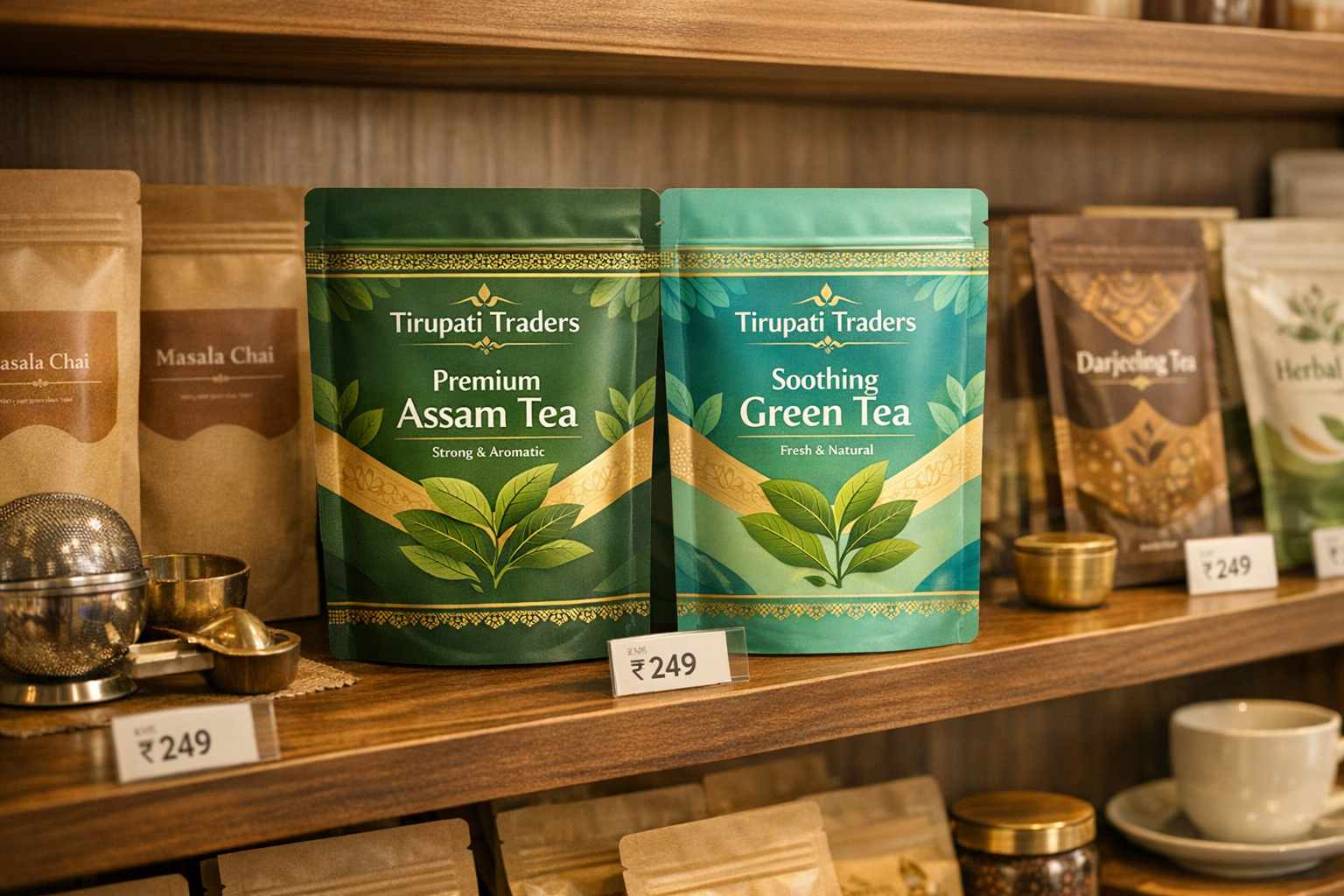
Today, flexible plastic pouches are the absolute pinnacle of packaging innovation. For B2B businesses and FMCG brands, the priority is clear: maximizing shelf life while ensuring the product looks irresistible on the display rack. Modern laminated films are engineered to create an impenetrable barrier against moisture, air, and UV light—the three biggest enemies of tea freshness.
3-side seal pouches have completely dominated the market because of their space efficiency and premium visual appeal. Features like resealable zip-locks and tear notches drastically enhance user convenience, allowing consumers to lock in the aroma long after the pack is first opened. For elite blends, nitrogen flushing technology is often used within these pouches to ensure the taste profile remains exactly as the master blender intended.
Having worked with highly respected brands like Steps Tea, Vizesa Tea, Aanchal Gold, and Mahan, we understand that high-definition rotogravure printing allows manufacturers to showcase vibrant, culturally resonant designs that instantly capture a buyer’s attention.
Top Trends Shaping Tomorrow’s Chai Packaging
Consumer behavior and technological leaps are pushing FMCG brands to innovate faster than ever. Here is what is driving the market right now:
- Single-Serve & Portion Control: Fast-paced urban lifestyles have spiked the demand for portion-controlled, travel-friendly sachets.
- Interactive & Smart Packaging: Adding QR codes to custom printed pouches gives buyers instant access to sourcing stories, brewing tutorials, and brand heritage.
- Transparency Builds Trust: Pouches with clear, transparent windows allow buyers to inspect the quality of the tea leaves before purchasing, instantly building consumer confidence.
- Luxury Aesthetics: Matte finishes, spot UV coatings, and metallic foiling cater perfectly to the premium and gifting segments.
- Food Safety First: Strict compliance with food safety certifications ensures that packaging materials are completely non-toxic and secure.
Sustainability: A Non-Negotiable Priority
Eco-conscious consumers are actively seeking brands that respect the environment. Green initiatives are rapidly reshaping the Indian packaging landscape. Biodegradable PLA films and kraft paper-laminated bags are increasingly replacing conventional plastics without sacrificing aesthetic appeal or durability.
By moving towards minimalistic designs that reduce material waste and using water-based, chemical-free inks, forward-thinking brands can significantly lower their carbon footprint. Embracing a circular economy through recyclable packaging is no longer just a trend—it is a critical business strategy for long-term survival.
Future Innovations in Tea Packaging
The next decade promises groundbreaking technological integration. We are looking at the possibility of smart sensors that can monitor the internal freshness of a sealed bag in real-time. Nanotechnology is paving the way for ultra-thin protective films with superior barrier capabilities, reducing the overall plastic volume used. Furthermore, AI-driven design tools are helping brands tailor their packet aesthetics based on deep consumer behavior insights.
How Poojn.in & Tirupati Traders Can Help Elevate Your Brand
The packaging evolution has clearly shifted from basic storage to intelligent, brand-building flexible pouches. At Tirupati Traders (and our dedicated portal Poojn.in), located in Kolkata, we specialize in delivering top-tier, custom plastic packaging solutions strictly tailored for the dynamic needs of FMCG brands, agro-industries, and food manufacturers.
Why Partner With Us?
- Bespoke Design Capabilities: We help you craft visually striking printed bags that command attention on crowded supermarket shelves.
- Uncompromised Material Quality: Our laminated structures are engineered to lock in the intoxicating aroma and freshness of your tea for extended periods.
- Sustainable Alternatives: We provide eco-friendly options to help your brand align with modern environmental standards.
- Versatile Sizing: Whether you need tiny 10-gram sample sachets or durable 5-kg bulk bags, we have the manufacturing capacity to deliver.
Featured High-Quality Tea Packaging Solutions
Explore our premium range designed specifically for tea manufacturers:
- High-Quality Tea Packaging Pouch – Secure and Stylish Storage
- Premium Tea Packaging Pouch – Freshness Sealed, Custom Printed
These advanced pouches come fully equipped with resealable heat seals, high-grade moisture barriers, and flawless custom printing to ensure your product stands head and shoulders above the competition.
Ready to Transform Your Packaging?
Don’t let outdated packaging hold your brand back. Whether you require bulk orders, customized laminates, or expert guidance on eco-friendly materials, we are here to support your growth.
Contact Us Today:
WhatsApp: +91 7003213441
Email: [email protected]
Partner with Poojn.in and Tirupati Traders to brew success and stay miles ahead in the competitive Indian tea market.
Frequently Asked Questions About Tea Packaging Trends
The original reason for loose-leaf tea storage
Historically, tea was traded and sold in bulk loose-leaf form simply because it was far more practical to transport and measure. Early maritime merchants needed a cost-effective, straightforward way to move massive quantities of tea across the globe without complicating the packing process.
The beginning of modern packaging innovations
The real shift started in the early 20th century. When the tea bag was introduced, the industry pivoted heavily from traditional bulk storage to focusing on end-user convenience, leading to the rapid evolution of single-use and small-batch packaging.
The impact of the tea bag on daily consumption
By completely eliminating the need for cumbersome strainers and teapots, tea bags made brewing incredibly fast and mess-free. This democratization meant that high-quality tea could be enjoyed anywhere, easily expanding the market to working-class consumers and busy households.
The primary benefits of switching to modern flexible pouches
For FMCG and agro brands, modern laminated pouches are an absolute game-changer. They offer a superior, airtight barrier against light, oxygen, and moisture. Additionally, they are incredibly lightweight, heavily customizable with vibrant prints, and feature resealable heat seals that keep the product factory-fresh even after opening.
The role of sustainability in current market trends
Environmental responsibility is no longer just a buzzword; it is a strict consumer expectation. Today, responsible packaging involves utilizing biodegradable materials, cutting down on virgin plastics, and adopting recyclable laminate layers to cater to an increasingly eco-aware demographic.
Features that make today’s tea pouches stand out
Innovation lies in the details. The inclusion of airtight zip-locks, transparent viewing windows to prove product authenticity, and heavy-duty vacuum sealing technology ensures that the aromatic oils in the tea leaves remain completely intact until they reach the teacup.
The ongoing debate between loose-leaf packets and modern pouches
Both formats thrive in today’s market. While loose-leaf tea packed in premium tin caddies or specialized pouches is highly favored by purists and connoisseurs for traditional brewing, standard flexible pouches are the undisputed kings of retail convenience and daily household consumption.
A glimpse into the future of tea preservation
The next wave of packaging will deeply integrate technology and ecology. We anticipate the widespread adoption of smart packaging with freshness indicators, AI-optimized sustainable material usage, and innovative designs that drastically minimize the environmental footprint of FMCG supply chains.