

In India, tea—or chai—is much more than just a morning beverage; it is an emotion, a daily ritual, and a vital thread in our cultural fabric. However, behind every comforting cup lies a highly intricate operational network. For FMCG brands, food manufacturers, and packaging companies, developing a deep understanding of the tea manufacturing journey is absolutely essential to deliver superior products. In this comprehensive guide, we map out the fascinating trajectory of tea leaves from cultivation to final retail, while showcasing how strategic packaging can seamlessly optimize the entire process.
The Tea Gardens: Where the Magic Begins
Cultivating and Harvesting the Perfect Leaf
The journey kicks off in the serene, high-altitude tea estates of regions like Assam, Darjeeling, and the Nilgiris. Here, the Camellia sinensis plant is carefully nurtured. These estates thrive on specific microclimates—requiring excellent soil drainage, misty environments, and moderate rainfall. Today, there is a massive shift toward sustainable and organic farming methods, ensuring that the crop is grown without harsh chemicals, meeting the modern consumer’s demand for eco-friendly produce.
Harvesting is an art form in itself. It relies heavily on the seasoned hands of workers who expertly pluck only the tenderest leaves and buds. The timing of this harvest—known as flushes—is critical. For instance, the highly anticipated spring “first flush” yields incredibly delicate flavors. Ethical sourcing, fair wages, and strict adherence to welfare certifications are now non-negotiable standards for dependable B2B supply chains.
The Art of Processing: Shaping Flavor and Character
Transforming Raw Harvest into Premium Brews
Once the green leaves are plucked, they are rushed to the factory to undergo a transformative processing phase. This phase dictates whether the final product will be a robust black tea, a subtle green tea, or an aromatic oolong. The primary stages include:
- Withering: Leaves are spread out to significantly reduce their natural moisture content.
- Rolling: The withered leaves are rolled or crushed (often using the CTC—Crush, Tear, Curl method popular in India) to break cell walls and release natural enzymes.
- Oxidation: This crucial resting phase allows the leaves to ferment. Green tea skips this, while black tea is fully oxidized.
- Drying: Finally, the leaves are fired or dried to lock in the flavor and completely halt oxidation.
To ensure uncompromising quality control, modern manufacturing integrates automated drying technology while preserving artisanal hand-rolling techniques for specialty batches.
Logistics: Moving the Brew Across the Globe
Efficient and Secure Global Transit
Transporting bulk tea securely from remote hilly terrains to bustling blending facilities requires a robust logistical framework. Depending on the distance and urgency, businesses utilize a mix of road freight, railways, and sea cargo. Air freight is occasionally reserved for extremely high-value, time-sensitive specialty shipments.
The biggest challenge during transit is moisture and contamination. Therefore, utilizing temperature-controlled environments and protective bulk packing is vital to preserve the tea’s intrinsic aroma. Cutting-edge tracking technologies like RFID and GPS are now standard, granting agro and pharma companies complete transparency over their cargo.
Blending, Packaging, and Branding: The Final Touch
Crafting the Perfect Retail Presentation
Before hitting the shelves, teas are meticulously blended by experts to maintain flavor consistency year-round or to create exciting new fusions. Once blended, the product enters the most consumer-facing stage of the supply chain: packaging and branding.
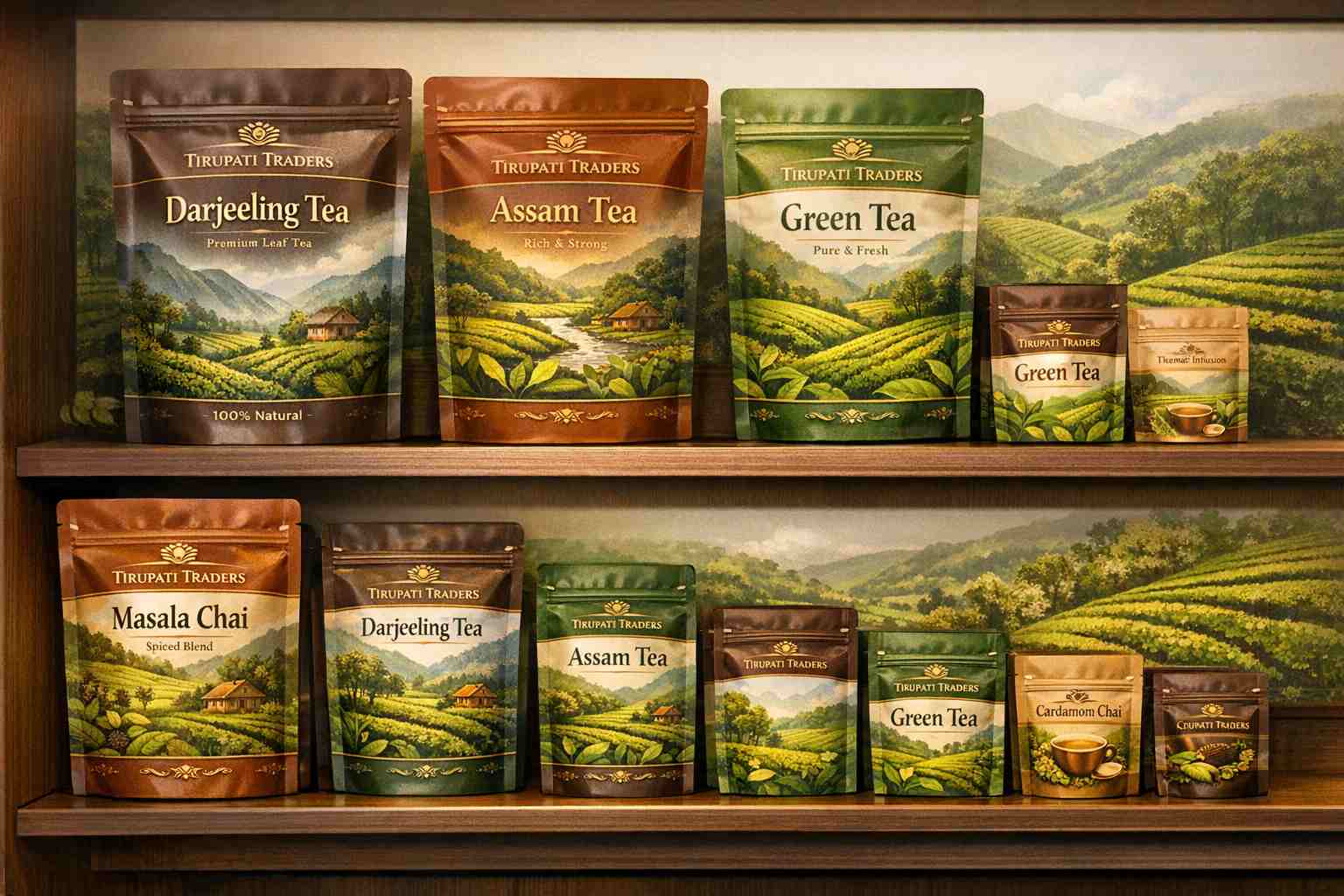
For FMCG businesses, packaging is the silent ambassador of the brand. Using custom plastic pouches that feature high-barrier properties protects the tea from moisture, UV light, and oxygen, drastically extending its shelf life. As a trusted manufacturing partner based in Kolkata, Tirupati Traders takes immense pride in collaborating with prominent tea brands. We have successfully engineered high-quality printed tea packaging pouches for industry players like Steps Tea, Aanchal Gold, Vizesa Tea, and Mahan, helping them dominate retail shelves with durability and striking visual appeal.
How Tirupati Traders & Poojn.in Elevate Your Tea Supply Chain
At Tirupati Traders, operating through our digital platform Poojn.in, we specialize in empowering food manufacturers and FMCG brands with dependable B2B packaging solutions. We understand that safeguarding the delicate aroma of tea requires precision engineering. Here is how we add tangible value to your supply chain:
- Tailor-Made Tea Packaging: From robust pouches for loose-leaf blends to specialized packets for tea bags, we ensure your product remains factory-fresh. Learn more about our premium packaging solutions.
- Advanced Freshness Retention: Our high-barrier laminates lock in the authentic aroma, ensuring the tea reaches your consumers exactly as the blender intended. Explore our high-barrier packaging materials.
- Stand-Out Brand Designs: We assist brands in creating visually striking packaging that reflects their unique identity and captures the Indian consumer’s eye. See our custom design options.
- Eco-Friendly Alternatives: Align with global sustainability goals by adopting our greener packaging solutions without compromising on product safety. Check out our eco-friendly packaging.
- Cost-Effective Bulk Solutions: For massive agro-manufacturers, we provide scalable and economical bulk bags perfect for transit and wholesale. Learn about our bulk packaging formats.
- Maximum Product Security: Build consumer trust with our tamper-evident seals that guarantee authenticity and safety. Discover our tamper-proof security options.
Whether you are launching a boutique tea startup or scaling a massive FMCG brand, our team is ready to deliver excellence. Contact us today at +91 7003213441 to discuss your custom requirements.
Distribution and Retail: Serving the Perfect Cup
Bridging the Gap to the Consumer
The final leg of the journey involves strategic distribution through modern trade, traditional wholesalers, and increasingly popular direct-to-consumer e-commerce platforms. Smart inventory management is crucial here to minimize warehouse time and maximize freshness.
Retailers rely heavily on the integrity of the packaging to ensure the tea doesn’t lose its character while sitting on the shelf. A well-packaged, attractively branded product not only preserves the tea but practically sells itself.
Frequently Asked Questions (FAQs)
What are the fundamental stages involved in the tea manufacturing journey?
The entire process spans from careful cultivation and leaf harvesting in the estates to factory processing, strategic blending, protective packaging, logistics, and finally, retail distribution.
Which regions are primarily known for cultivating quality tea?
High-grade tea flourishes in tropical and subtropical highlands. Globally, top producers include India (especially Assam and Darjeeling), China, Sri Lanka, and Kenya.
What exactly happens to the leaves once they are harvested?
Freshly plucked leaves go through withering, rolling, oxidation (depending on the desired tea type), and drying. This sequence dictates the final flavor profile, differentiating a green tea from a black or oolong tea.
How crucial is the logistics phase in this industry?
Logistics is the backbone of the operation. It ensures the swift and safe transit of bulk tea from remote gardens to processing hubs and ultimately to global retail markets, all while maintaining strict quality parameters.
How is the aroma and quality preserved during long-distance shipping?
Producers utilize airtight, moisture-resistant barrier packaging and temperature-controlled shipping containers to completely block out contamination, humidity, and odors during transit.
What primary elements dictate the retail price of consumer tea?
Pricing is influenced by labor-intensive harvesting, processing complexities, the quality of premium packaging materials, transportation overheads, and the rarity of the specific flush or blend.
How are modern FMCG brands adopting eco-conscious supply chains?
Forward-thinking businesses are partnering with certified organic estates, minimizing processing waste, and transitioning to sustainable, high-quality pouch packaging to reduce their environmental footprint.
Why is selecting the right packaging manufacturer so critical?
Superior packaging acts as a shield against air, UV rays, and moisture. Partnering with a reliable B2B supplier ensures the tea retains its garden-fresh vitality from the factory floor straight to the consumer’s teacup.
Conclusion: Ensuring Excellence at Every Step
The Indian tea supply chain is a brilliantly orchestrated symphony that connects serene high-altitude gardens to bustling city homes. For food manufacturers, agro companies, and FMCG brands, mastering this flow is a distinct competitive advantage. By embracing sustainable sourcing, efficient logistics, and partnering with industry experts like Tirupati Traders for top-tier custom packaging, businesses can confidently promise—and deliver—the perfect cup of tea to the world.